
Drywall Finishing in Mount Dora. FL | Level 4 & Level 5 Wall Finishes
Drywall finishing has actual defined levels. Most problems on a job come from nobody agreeing which one applies. The industry recognizes finish levels from bare hung board through to a fully skim-coated surface. Each level describes a specific amount of coating, sanding, and preparation. Mount Dora Drywall Prosfinishes drywall to specified levels in homes and commercial buildings across Mount Dora. Lake County, from the basic treatment suited to a storage area through to Level 5 in rooms where light and sheen expose everything. Naming the level in writing before work starts is the simplest way to avoid a disagreement at the end.
The reason it matters is that a finish is only good enough relative to the conditions it lives in. A Level 4 finish in a hallway with flat paint. No direct window looks perfect and will for decades. The same finish on a great room wall with tall windows. A satin sheen will show every coated joint as a subtle band once the afternoon light rakes across it, because compound. Board paper absorb light differently. Neither outcome is a defect. One is a specification mismatch. We talk through lighting, sheen. Use before quoting so the level suits the room rather than the budget line. Tell us about your spaces and request a quote.
Get a FREE Quote.
Why Choose Mount Dora Drywall Pros for Finishing
Finishing is where careful work is invisible and careless work is permanent. Mount Dora Drywall Pros builds surfaces up in proper coats with real drying time between them. Because compound applied over compound that has not cured shrinks. Cracks later, usually a few months after everyone has forgotten who did the work. We feather wide rather than tight. Since a narrow feather is quicker but leaves an edge that catches light. We also inspect under raking light before priming rather than standing square to the wall where everything looks acceptable.
We specify the level per area rather than applying one standard across a property. Usually saves money. There is no value in a Level 5 finish in a closet. No value in a Level 4 in a room designed around a window wall. We tell you where the upgrade matters and where it does not. On commercial work we finish to the level shown in the specification. Can hand over at any stage, whether you need surfacesprimed and paint-readyor finished to a defined level for your own painting contractor. Clear scope, honest recommendations, and a surface that holds up under the lighting you actually have. Check availability and we will assess your spaces.

Our Drywall Finishing Services
Finishing covers a spectrum from basic joint treatment through to a fully skimmed surface. Different areas of the same building often warrant different levels. Below are the finishing services we provide for properties around Mount Dora.
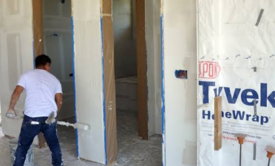
Level 4 Drywall Finishing
Coating and sanding joints, corners. Fastener points to the standard suited to flat paint and typical lighting conditions.
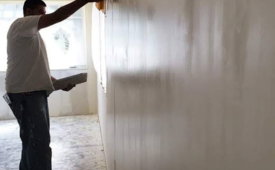
Level 5 Skim Coat Finishing
Applying a skim coat across the full surface so the entire wall shares one texture. Porosity under strong light or sheen.
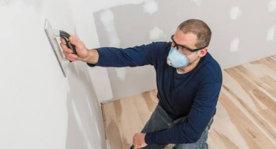
Basic and Intermediate Level Finishing
Finishing to lower defined levels where surfaces will be concealed, tiled. Located in areas that do not warrant full treatment.
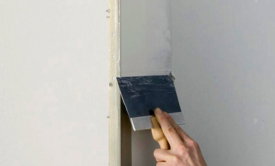
Corner and Bead Finishing
Coating internal corners and external bead so angles read straight. True rather than wavering along their length.
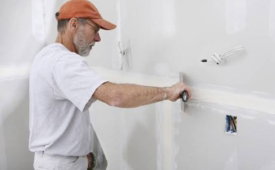
Fastener and Joint Treatment
Treating every fastener point and seam so no head, shadow. Tape edge shows through the finished paint.
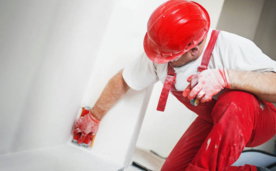
Surface Inspection and Correction
Checking completed surfaces under raking light and correcting anything visible before the primer goes on.
Choosing Finish Levels Room by Room
Three factors decide the level a room needs. The first is light, specifically whether any light source crosses the wall at a low angle. Tall windows, sliding doors, skylights. Wall-washing fixtures all do this. They reveal surface variation that would be invisible under overhead lighting. The second is paint sheen, since flat paint scatters light. Hides minor variation while eggshell, satin. Semi-gloss reflect it and expose everything. The third is viewing distance. Use, because a wall people pass in a corridor is judged differently from one behind a sofa where people sit for hours. A room scoring high on all three justifies Level 5. A closet does not.
Conditions in the building decide whether the specified level is achievable. Joint compound needs stable temperature and airflow to cure evenly. Florida humidity slows that significantly. Particularly in properties that are not yet conditioned. Coats applied onto compound that is still damp shrink as they dry. Produce cracking along joints months later. Is the single most common cause of finishing failures here. We want the air conditioning running and the building dried in before finishing starts. Dust control also has to be planned. Since sanding produces fine particles that travel readily. Occupied properties need containment and commercial buildings need HVAC returns isolated during the sanding stage.
Light and Conditions in Local Buildings
Building design around Mount Dora puts real demands on finishing. The newer subdivisions favor open plans, tall great rooms, and large window walls. Along with sliding doors onto lanais. All of these flood interior walls with low-angle light for much of the day. Two-story entries and stairwell walls are similarly exposed. Those spaces routinely justify a higher finish level than the rest of the house. Deciding that before the first coat costs far less than upgrading afterward. Older homes near the town center present the opposite situation, with existing textures. Walls that are no longer perfectly flat. Where the goal isblending sympathetically rather than achieving modern flatness across an old surface.
Climate governs the schedule more than the technique. The long humid season extends drying times between coats considerably. A property without air conditioning running can add days to a finishing program. Unconditioned spaces such as garages, enclosed lanais. Commercial back-of-house areas swing between hot. Humid, which affects both curing and how the finish performs over the years. Afternoon storms through the wet season raise indoor humidity sharply even in conditioned buildings. We plan finishing programs with those realities built in rather than promising a compressed schedule that forces coats and produces cracking later. We finish new builds to the same standard in Groveland, Ocoee, and Fruitland Park.
What Affects the Cost of Drywall Finishing
Finish level is the dominant factor. The jump to Level 5 is substantial. Because a skim coat means applying compound across the entire wall surface rather than only at joints. Fasteners, then sanding and priming all of it. The area involved scales from there. Ceilings costing more per square foot than walls since overhead coating. Sanding are slower and more physically demanding. Height adds cost anywhere staging or lift gear is needed. Applies to vaulted rooms, stairwells, and two-story spaces.
Complexity accounts for the rest. A large open wall finishes efficiently. The same square footage broken into small rooms with many corners, openings, returns. Bead runs takes considerably longer. Since corners and beads are hand work. Soffits, archways, niches, and tray ceilings each add detail time. The condition of the hung board matters too. Since poorly hung work with gaps. Inconsistent fastener depth takes more compound and more passes to correct. Drying time between coats determines program length. Humidity extends it. Whether priming is included and how much containment the property requires also feed in. Request a quote and we will price levels separately so you can compare.
How We Finish Drywall to a Specified Level
Step 1: Surface Assessment and Level Recommendation
We review each area for light exposure, planned paint sheen. Use, then recommend a finish level per space rather than applying one standard across the whole property.
Step 2: Written Scope With Levels Defined
Your quote names the finish level for each area. What that level includes, whether priming is part of the scope. What is excluded, so there is no ambiguity at handover.
Step 3: Board Inspection and Preparation
Before coating we check the hung board for fastener depth, gaps. Unsupported edges, correcting anything that compound cannot reasonably fix. Reporting it if the board was hung by others.
Step 4: Protection and Environment Control
Floors, trim, and fixtures are covered. Containment goes up where the building is occupied. We confirm the space is conditioned so coats will cure evenly rather than drying at the edges first.
Step 5: Taping and Bedding Coat
Tape is bedded into every seamand internal corner, external bead is coated. Fastener points receive their first pass so nothing is overlooked once later coats go on.
Step 6: Fill and Finish Coats
Successive coats are applied and feathered progressively wider. Each allowed to dry fully before the next. This is the stage that cannot be compressed without causing shrinkage cracks later.
Step 7: Skim Coat Where Specified
Where Level 5 has been agreed. A skim coat is applied across the entire surface so coated joints. Bare board face share the same texture and porosity under light.
Step 8: Sanding, Inspection, and Priming
Surfaces are sanded, checked under raking light from multiple angles. Corrected where needed, then primed so absorption is even. The painter receives a genuinely paint-ready surface.
Drywall Finishing FAQs in Mount Dora
They are a defined industry scale describing how much treatment a surface has received. Lower levels cover bare board. Minimal joint treatment, suited to concealed areas or surfaces receiving tile. Level 4 is the common standard for most finished interiors. Joints, corners, and fasteners coated and sanded. Level 5 adds a skim coat over the entire surface. The scale exists so the specification is unambiguous. Naming the level in your contract is the best protection against a disagreement about whether the work is acceptable.
Level 4 is enough for most rooms with flat paint and ordinary lighting. Paying for Level 5 across a house is usually unnecessary. Level 5 earns its cost where light rakes across the wall from tall windows, sliding doors. Wall-washing fixtures, and wherever the paint has a satin or semi-gloss sheen. Great rooms, two-story entries, stairwell walls. Feature walls are the usual candidates. We go through the property. Recommend it only in the areas where the difference will genuinely show.
You can, but it costs more than specifying it initially. Upgrading after the fact means the surface has to be prepared again. The skim coat applied over finished work, then sanded. Re-primed, and if the room has already been painted that paint is effectively wasted. It also means a second round of dust. Disruption in a room you had finished with. This is why we push to settle the level per room before any coating starts rather than leaving it as a decision for later.
The most common reason is coats applied before the previous one fully cured. Causes shrinkage as the trapped moisture eventually leaves. Humidity here makes that more likely because drying takes longer than crews used to other climates expect. Other causes include framing movement, inadequate joint reinforcement. Board edges that were unsupported behind the joint. We build drying time into the schedule rather than compressing it. We check board support before coating. Because these cracks are avoidable rather than inevitable.
Regularly. We inspect the hung board first. Tell you honestly what we find. Because fastener depth, board gaps. Unsupported edges all affect how much work finishing will take and what result is achievable. Compound corrects a lot but not everything. A wall hung with significant variation will show it regardless of finishing effort. Once we have both seen the starting condition. Agreed the scope, we take the surface through to the level you have specified.
It sits between the two. It should be explicitly assigned in the scope. Because when it is assumed it often gets skipped. Compound and drywall paper absorb paint at very different rates. An unprimed surface shows joints as duller or shinier bands through the topcoat regardless of how well it was finished. We include priming in our scope where you want a genuinely paint-ready surface handed over. We state it clearly in the quote either way so there is no gap between our work and your painter's.
Get a Clear Quote on Your Project
The next step is a straight conversation about the space itself. Tell us what you are dealing with. Send through photos or plans if you have them. We will let you know what the work involves. How long it should take. What it will cost. There is no obligation attached to an estimate. We would rather spend the time getting the scope right than hand you a number that changes halfway through the job.
Mount Dora Drywall Prosworks with homeowners, builders, property managers. Business owners across Mount Dora and the surrounding Lake County area. Request a quote or check availability. You will get a clear answer on timing rather than a vague callback promise. If your schedule is tight or you are coordinating around other trades, tell us upfront. We will plan the work around it.