
Drywall Replacement in Mount Dora. FL | Damaged & Old Drywall Removal
There comes a point where repairing drywall stops making sense. The board has been patched too many times. It has absorbed moisture and lost its strength. The surface has been skimmed. Textured over so many decades that nothing sits flat anymore. Mount Dora Drywall Prosremoves and replaces drywall in homes and commercial buildings across Mount Dora. Lake County, from a single wall that has reached the end of its life to whole-room. Whole-property replacement during a renovation. Replacement is a bigger job than a patch. It draws a line under the problem instead of extending it.
The removal half of the work matters as much as the installation. Taking old board down creates dust. Exposes whatever is in the wall cavity. Occasionally reveals framing, wiring, or moisture issues that nobody knew about. We plan the demolition properly, contain the area. Check what we find before closing it back up. Dispose of the waste rather than leaving it stacked on your property. Opening a wall is also the cheapest opportunity you will ever have to upgrade insulation, add blocking. Update wiring, so it is worth deciding on those before the new board goes on. Tell us what you are dealing with and request a quote. We will give you a straight answer on whether replacement is the right call.
Get a FREE Quote.
Why Choose Mount Dora Drywall Pros for Replacement Work
Replacement jobs go wrong in the demolition stage far more often than in the installation. Rushed removal damages framing, breaks wiring, tears insulation. Spreads dust through a building that then takes weeks to settle. Mount Dora Drywall Pros treats the strip-out as real work with its own method. Not as something to get through before the interesting part starts. We contain the area first. Remove board in a controlled way. Keep fasteners, debris, and dust under management across.
The other thing we do is tell you what we find. Once a wall is open. You are looking at the actual condition of the framing. The insulation, the plumbing. The wiring, and that is the moment to deal with anything that needs attention. We document what is behind the board before covering it. Flag anything outside our scope so you can get the right trade in. Do not simply board over a problem to keep the schedule moving. You get a clear scope covering removal, disposal, replacement. Finish level, with no vagueness about what happens to the waste. Check availability and we will talk through the sequence with you.

Our Drywall Replacement Services
Replacement work ranges from a single compromised wall to stripping an entire property back to the studs. What drives the approach is how much comes out. What is behind it. Whether the building stays occupied while the work happens. Below are the replacement services we handle most often around Mount Dora.
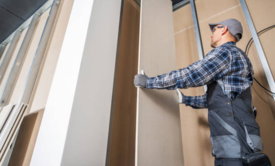
Single Wall and Partial Replacement
Removing and replacing one wall or a defined section where damage, moisture. Repeated patching has gone too far.
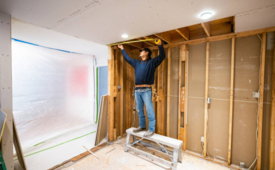
Full Room Drywall Replacement
Stripping a room back to the framing. Reboarding it completely, including walls, ceiling, and all detail areas.
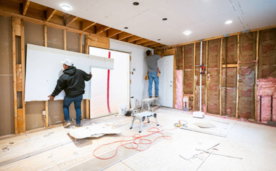
Whole-Property Strip-Out and Reboard
Removing all existing board across a house or commercial unit during a major renovation and installing new across.
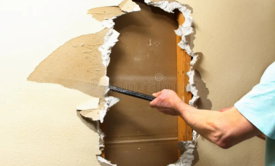
Old and Deteriorated Board Removal
Taking out aged, crumbling, or over-patched drywall in older buildings where the surface can no longer be made good.
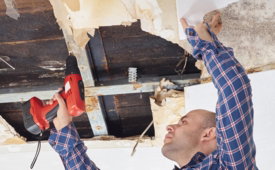
Post-Damage Board Removal
Removing board affected by moisture, impact, or long-term deterioration and cutting back to sound, dry material.
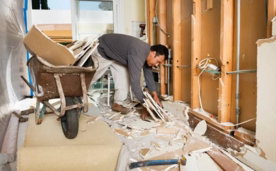
Waste Removal and Site Clearance
Loading out old board, fasteners, and debris. Clearing the property rather than leaving piles for you to deal with.
Planning a Strip-Out in an Occupied Building
Removal is the disruptive part of the job. It needs planning in proportion. Old board carries decades of dust. Pulling it down releases far more into the air than any sanding does. Containment goes up before the first sheet comes off. In an occupied house that means sealing the work zone, protecting floors. The route out to the truck. Agreeing which rooms stay in use. In a commercial building it means isolating HVAC returns so dust does not travel between tenancies. Scheduling noisy demolition outside trading hours. Access matters more than people expect on the way out as well as in. Since old board comes out in awkward pieces. Properties with narrow side access, long driveways, shared corridors. Upper floors need the waste route planned in advance.
What sits behind the board is the other planning question. Before demolition we discuss what is likely in the wall. Including plumbing, electrical, data cabling. In older buildings supplies that may need specialist handling and testing before anyone cuts. Once the cavity is open. It is worth deciding in advance whether you want insulation upgraded. Blocking added for future fixtures. Wiring updated, because doing it later means opening the wall again. In Florida conditions we also want the space dry. Conditioned before new board goes up. Since boarding over damp framing or a cavity that has not dried out simply relocates the problem. In bathrooms, and laundry rooms. New board is the right moment to switch tomoisture-resistant drywall.
Older Buildings and Aging Board Around Mount Dora
Plenty of properties around Mount Dora are old enough that the wall surfaces have been through several lives. Homes in the older streets near the town center often have layers of texture, plaster patches. Board that predates current standards. Fastened to furring strips or framing that is no longer straight. At a certain point on those walls. Every new patch just highlights the unevenness around it. Replacement gives a better result for less frustration. Mid-century properties that have been extended over the decades commonly have two or three different wall build-ups in one house. Is something we look for before quoting a replacement scope.
Climate accelerates the aging. The long humid season, unconditioned garages, enclosed lanais. Hot attic spaces all put stress on board over time. Softening paper faces and working fasteners loose. Storm season adds water intrusion through roofs, windows, and flashing. Board that has been wet more than once rarely recovers its strength even when it looks dry. In commercial and industrial units, unconditioned back-of-house areas. Wide-span buildings that move with temperature tend to produce board that has cracked repeatedly in the same places. Replacement in those spaces is often cheaper over a few years than another round of patching.
We replace the same aging walls in older homes in Eustis, Tavares, and Leesburg.
What Affects the Cost of Drywall Replacement
Replacement pricing has two halves that a straight installation quote does not. The first is removal, which covers labor to strip the board out. The awkwardness of doing that in an occupied or access-limited property. The volume of waste generated. Old board is heavy, and disposal costs scale with quantity. A full-house strip-out carries a significant waste part that a single wall does not. Containment adds to it as well, since occupied buildings. Dust-sensitive environments need barriers and air management that an empty property does not.
The second half is what the installation encounters once the wall is open. Framing that needs straightening, furring strips that need replacing, missing backing. Insulation that has to be renewed all add scope that could not be seen at quoting stage. That is why we quote replacement with clear inclusions. Flag likely unknowns upfront rather than pretending everything behind the board will be perfect. Beyond that, the usual drivers apply: ceiling work costs more than wall work, height. Access affect labor, the number of corners and openings adds cut time, andfinish level changes the finishing hours. Request a quote and we will separate removal, disposal. Installation so you can see where the money goes.
Our Removal and Replacement Process
Step 1: Assessment and Replace-or-Repair Advice
We inspect the existing board. Check for moisture, movement, and fastening issues. Tell you honestly whether replacement is warranted or whether targeted repair would still give a good result.
Step 2: Scope, Quote, and Cavity Decisions
You receive a written quote separating removal. Waste disposal, and new installation. At this stage we also confirm whether insulation, blocking. Wiring work is planned while the cavity is open.
Step 3: Containment and Property Protection
Barriers go up around the work zone, floors. The waste route are protected. HVAC returns are isolated where required. In occupied properties we agree which areas stay in use and what hours we work.
Step 4: Controlled Board Removal
Old board is taken down in a controlled sequence rather than torn out. Protecting framing, wiring, and plumbing behind it. Fasteners are removed as we go instead of being left in the studs.
Step 5: Cavity Inspection and Reporting
With the wall open we check framing condition, moisture, insulation. Services, then report what we find before anything is covered. Issues outside our scope are flagged so you can bring in the right trade.
Step 6: Framing Preparation and New Board Installation
Framing is straightened, shimmed, or furred where needed and backing is added at unsupported edges. New board is then hung to the correct specification. Ceilings first and walls pushed up tight beneath them.
Step 7: Finishing and Bead Detailing
Corner bead is fitted to external angles and returns, then joints aretaped and built up in feathered coatsto the finish level agreed in your quote. The surface is handed over to your finisher.
Step 8: Waste Removal and Final Walkthrough
All old board, fasteners, packaging. Debris are removed from the property. Protection is lifted, the space is swept. We walk the finished rooms with you under good light before closing out.
Drywall Replacement FAQs in Mount Dora
The usual test is how much of the wall is still sound. Isolated damage in otherwise good board is a repair. Replacement makes more sense when board has been wet. The surface has been patched so many times that nothing sits flat. The paper face is soft or crumbling. When fasteners no longer hold because the board has aged. Cost comes into it too, since several large patches plus texture matchingacross an old wall can approach the price of replacing the section outright with a better result. We give you our honest read after inspecting it.
Removal produces more dust than any other stage of drywall work. Because old board releases everything that has accumulated in it. In the cavity behind. That said, it is controllable. We seal the work area, protect floors. The route out, isolate HVAC returns so dust does not circulate through the building. Bag or load out debris as we go rather than letting it pile up. You should expect some fine dust in the immediate area. It should not spread through rooms we are not working in.
We stop and tell you before covering anything. Common finds include damp or previously wet framing. Missing or compressed insulation. Damaged wiring, plumbing that should be addressed while accessible. Framing that has twisted or is out of plane. Some of that we can handle. Some needs an electrician, plumber, or remediation specialist. Either way you get photos. A clear explanation, plus any cost implication in writing, before we proceed. Boarding over a known problem is not something we do.
If it is on your list at all. This is the moment. Access is the expensive part of insulation work. You have already paid for it once the board is off. The same applies to adding blocking for future wall-mounted televisions, grab rails, shelving. Cabinetry, and to running any new electrical or data cabling. Doing these things later means cutting open a finished wall. Repeating the repair and finishing work. We raise it at quoting stage so you can decide before the strip-out rather than during it.
For a single wall or one room. Usually yes, provided the area can be sealed off. You can work around the disruption. For a whole-house strip-out it is harder, because dust, noise. The loss of finished surfaces affect most of the property at once. The finishing stage runs over several days. Many homeowners stay for partial replacements and move out for full renovations. We will be straight with you about what the disruption looks like so you can plan. Rather than discovering it on day two.
We remove it. Old board, fasteners, and debris are loaded out. Taken off the property as part of our scope. The disposal cost is shown in your quote rather than appearing later. Drywall waste is heavy and bulky. On larger jobs this is a meaningful part of the job rather than an afterthought. If you would prefer to handle disposal yourself for any reason, tell us. We will price the work without it.
Get a Clear Quote on Your Project
The next step is a straight conversation about the space itself. Tell us what you are dealing with. Send through photos or plans if you have them. We will let you know what the work involves. How long it should take. What it will cost. There is no obligation attached to an estimate. We would rather spend the time getting the scope right than hand you a number that changes halfway through the job.
Mount Dora Drywall Prosworks with homeowners, builders, property managers. Business owners across Mount Dora and the surrounding Lake County area. Request a quote or check availability. You will get a clear answer on timing rather than a vague callback promise. If your schedule is tight or you are coordinating around other trades, tell us upfront. We will plan the work around it.