
Drywall Taping & Mudding in Mount Dora. FL | Smooth Joint Finishing
Every sheet of drywall has four edges. Every place two of them meet is a line that has to be made invisible. Taping and mudding is the work of turning a wall covered in joints into a single flat plane. Mount Dora Drywall Prosprovides taping and mudding services for homes and commercial buildings across Mount Dora. Lake County, on new installations, additions, repairs. Boards hung by other crews. It is skilled hand work, it cannot be rushed. It is where the difference between an average wall and a good one is decided.
The craft is in the transitions. Tapered edges, where two factory edges meet. Sit in a shallow recess made to be filled flush. Butt joints, where two cut ends meet. Have no recess at all. The compound has to be built up. Feathered very wide to disguise a joint that is technically proud of the wall. That is why butt joint placement matters at hanging stage. Why a crew that feathers narrow leaves visible bands across a room. Internal corners, external bead, and fastener points each need their own approach too. We treat each joint type according to what it needs rather than running the same pass over everything. Tell us what you have and request a quote.
Get a FREE Quote.
Why Choose Mount Dora Drywall Pros for Taping and Mudding
Taping is judged in the first week of afternoon sunlight. Not on the day it is done. Mount Dora Drywall Pros bedds tape properly rather than floating it on too much compound. Works the tape down so no air sits behind it. Builds coats progressively wider instead of trying to fill a joint in two heavy passes. Heavy application feels faster and produces more sanding, more shrinkage. More visible ridges, so we do the opposite. Drying time between coats is respected because skipping it is the direct cause of the cracks that appear months later.
We also use the right compound for the right stage rather than one bucket for everything. Setting compound for bedding and heavy fills where strength. Speed matter, lightweight compound for finish coats where sandability matters. Appropriate treatment at corners and bead. On repairs and remedial work we check whether the joint was properly supported behind before re-taping. Since a joint with no backing will fail again regardless of how well it is finished. Whether you need taping only or want us to carry through toa defined finish level, the scope is clear in writing. Check availability and we will look at the job.

Our Taping and Mudding Services
Joint treatment varies depending on the type of joint. The condition of the board. Whether the work is new or remedial. Below are the taping and mudding services we handle most often for properties around Mount Dora.
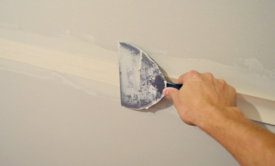
Flat Seam Taping and Mudding
Bedding tape into tapered and butt joints between sheets. Building the compound out so the seam reads flat.
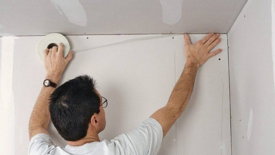
Internal Corner Taping
Taping and coating internal corners so the angle is straight. Crisp without excess build-up in the corner itself.
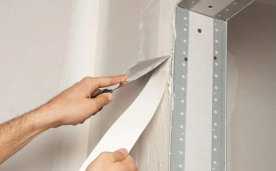
External Corner Bead Finishing
Coating metal and paper-faced bead on external angles. Building out from the bead so the corner line stays true.
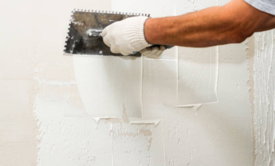
Fastener Head Treatment
Coating and smoothing every screw and nail point across walls. Ceilings so no head or shadow shows through paint.
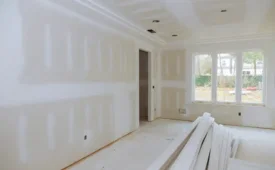
New Construction Taping and Mudding
Taping and mudding freshly hung board as a standalone service where another crew handled the installation.
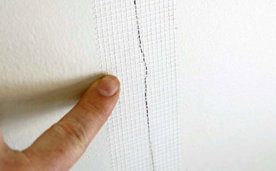
Re-Taping Cracked or Failed Seams
Removing bubbled, lifting, or cracked tape and re-taping the joint with proper support behind it.
Board Condition, Compound Choice, and Drying Time
The starting condition sets the ceiling on what taping can achieve. Before coating we check fastener depth. Since heads left proud will telegraph through every coat. Heads punched through the paper have no holding power and need replacing. We look at gaps between sheets. Because wide gaps need filling with setting compound before tape goes on rather than being bridged with tape and hoped for. We check that joints land on framing. That edges are supported, since an unsupported joint will flex. Crack no matter how well the tape is bedded. Where board was hung by another crew. We report what we find before starting rather than absorbing problems that will show later.
Compound selection and conditions determine how it performs. Setting compounds harden chemically and suit bedding, filling gaps. Situations where drying time is limited. Drying compounds are easier to sand and suit finish coats. Using a heavy general-purpose compound for a finish coat means excessive sanding. Using a lightweight finish compound for bedding means weak joints. Florida humidity complicates the schedule because drying compound relies on evaporation. In a property without air conditioning that can take much longer than expected. A coat applied over a joint that is still damp underneath shrinks later and cracks. We want the building dried in and conditioned. We plan the number of visits around realistic drying rather than an optimistic program.
Joint Work in Mount Dora Buildings
The buildings around here create particular demands on joint work. Newer homes in the local subdivisions tend to have open plans with long uninterrupted walls, tall great rooms. Large window openings, which means long seam runs sitting in strong side light. Butt joints in those rooms need feathering considerably wider than they would in a compact space. Joint placement during hanging matters more than usual. Two-story entries and stairwell walls present the same challenge with the added difficulty of working at height. Older homes near the town center bring different work. Often involving re-taping seams that have opened over decades in walls that are no longer perfectly flat.
Climate influences both the schedule and the long-term result. The long humid season extends drying times between coats. Unconditioned spaces such as garages, enclosed lanais. Commercial back-of-house areas make it worse. Buildings also move here, with hot attic spaces driving expansion. Contraction that shows up along ceiling junctions and at the top of walls. That is a recurring source of cracked seams in local properties. Re-taping without addressing whether the joint can accommodate movement means the same line reopens. Storm season raising indoor humidity sharply is another reason we prefer to control conditions rather than work around them. We tape new construction and remodels in Apopka, Groveland, and Astatula as well.
What Affects the Cost of Taping and Mudding
Linear footage of joint is the real measure rather than wall area. The two do not track together. A large room boarded with long sheets has fewer joints per square foot than the same area broken into small rooms, closets, and hallways. Butt joints cost more than tapered joints because they need building up and feathering much wider. Internal corners and external bead are hand work that cannot be sped up. A layout with many corners, openings, soffits. Returns carries more cost per square foot than long clean runs.
Board condition and program length account for the rest. Poorly hung board with proud fasteners, wide gaps. Unsupported joints needs correcting before coating. That adds both time and material. Ceiling work costs more than wall work because overhead application and sanding are slower. Height requiring staging or lifts adds setup. The number of coats depends on the finish level agreed. Each coat needs drying time. Humidity directly affects how many visits a job takes. Whether we are taping only or carrying through to priming also changes the scope. Request a quote and we will price from the actual joint count rather than a square-foot rule of thumb.
How We Tape and Mud a Drywall Surface
Step 1: Board Inspection and Condition Report
We check fastener depth, sheet gaps. Joint support, and board alignment before quoting. Anything that compound cannot reasonably correct is reported to you rather than covered up. Left to show later.
Step 2: Written Scope and Finish Level
Your quote sets out the joint work included. The finish level being worked to. The expected number of visits. Whether priming is part of our scope or handed to your painter.
Step 3: Preparation and Fastener Correction
Proud fasteners are reset, heads punched through the paper are replaced. Wide gaps are prefilled with setting compound so tape is bedding onto a sound, supported joint.
Step 4: Tape Bedding on Seams and Corners
Tape is bedded into every flat seam. Internal corner with the compound worked out from behind it. Leaving no voids that would bubble or lift once the surface dries.
Step 5: Bead Coating and Fastener First Pass
External bead is coated so the corner line stays straight along its length. Every fastener point receives its first pass at this stage rather than being picked up later.
Step 6: Fill Coats and Progressive Feathering
Successive coats are applied with each feathered wider than the last. Butt joints spread widest of all. Every coat allowed to dry fully before the next goes on.
Step 7: Sanding and Raking Light Inspection
Joints are sanded smooth and the surface is checked under raking light from several angles. Because a joint that looks fine square-on can still show a band when light crosses it.
Step 8: Cleanup and Handover or Priming
Dust and debris are removed and protection lifted. Then the surface is eitherprimed as part of our scopeor handed over to your painter at the finish level agreed.
Taping and Mudding FAQs in Mount Dora
Tapered joints occur where two factory edges meet. The board is slightly recessed there by design. Compound fills the recess and finishes flush with the wall. Butt joints occur where two cut ends meet and there is no recess at all. Any compound sits proud of the surrounding surface. The only way to disguise a butt joint is to build it up gradually. Feather it very wide. Is why they take longer. Why good hanging keeps them out of high-visibility areas in the first place.
Three is standard for most work: a bedding coat that sets the tape, a fill coat. A finish coat, each feathered wider than the last. Butt joints often need a fourth because of how wide they must be spread. Higher finish levels add further coating across the surface. Applying fewer heavy coats instead of more thin ones is a false economy. Since thick compound shrinks more, sands harder. Is far more likely to crack once it has fully dried.
Both have their place. Paper tape is stronger in tension and is the standard choice for flat seams. Internal corners, where it produces a crisp, durable joint. Self-adhesive mesh tape is convenient for patches and small repairsand works well with setting compound. Is important because mesh with ordinary drying compound makes a weaker joint. We select based on the joint type and situation rather than using one across. On corners paper is generally the better answer.
Almost always because there was not enough compound behind it when it was bedded. Leaving air trapped under the tape that later separates. It can also happen when tape is applied over a dusty or contaminated surface. When the joint underneath is moving. The fix is not adding more compound on top. Since the bond underneath has already failed. The affected tape has to come off so the joint can be re-bedded properly. We check for movement or support issues while it is open.
Yes, and it is a regular part of our work. We inspect the hung board first. Give you an honest report, since fastener depth, sheet gaps. Unsupported joints directly affect both how long the work takes and what result is achievable. Compound can correct a great deal but not everything. A poorly hung wall will always have limits. Once we have agreed on the starting condition. The scope, we take the joints through to the finish level you need.
Typically several days to a week for a standard job. Because each coat has to dry completely before the next goes on. Three coats plus sanding is the usual minimum. Higher finish levels take longer. Humidity here extends drying noticeably. Especially in a property without air conditioning running. We give you a realistic schedule rather than compressing the coats. Because forcing them is the main cause of shrinkage cracks appearing a few months after the room is finished.
Get a Clear Quote on Your Project
The next step is a straight conversation about the space itself. Tell us what you are dealing with. Send through photos or plans if you have them. We will let you know what the work involves. How long it should take. What it will cost. There is no obligation attached to an estimate. We would rather spend the time getting the scope right than hand you a number that changes halfway through the job.
Mount Dora Drywall Prosworks with homeowners, builders, property managers. Business owners across Mount Dora and the surrounding Lake County area. Request a quote or check availability. You will get a clear answer on timing rather than a vague callback promise. If your schedule is tight or you are coordinating around other trades, tell us upfront. We will plan the work around it.